
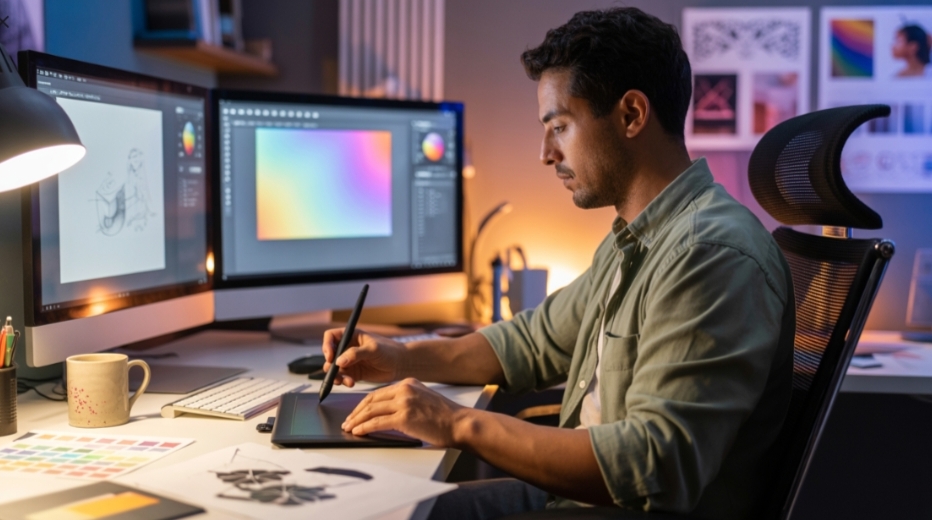
Remember when less was more? Over the past decade, ultra-minimalist logos ruled branding. Clean lines, single-color palettes, and simple geometric shapes became the cool kid on the block. Startups to tech titans chased that sleek, flat look because it felt modern and “digital-friendly.” Minimalist logos promised versatility on tiny smartphone screens and clarity on every interface. They were the reigning kings of the design world for a while.
But somewhere along the way, all that minimalism started to lose its magic. Suddenly the world of logos looked like a sea of sameness – bland wordmarks with generic sans-serif fonts, one-dimensional icons, or plain lettermarks. Brands had stripped out almost every hint of personality. What was supposed to be timeless became forgettable.
When Less Became Boring
By the late 2010s and early 2020s, cracks were showing in the minimalist mania. Designers and consumers started noticing: it seemed like every company logo had merged into one background shade. It was like attending a monochrome party where everyone’s wearing black tee and white jeans – safe, maybe, but snooze-inducing. People even coined a term for it: “blanding.” The gist? Logos had become so bland, they all bled together.
The issue wasn’t that simplicity is inherently bad. A clean, no-clutter logo can be elegant and practical. The problem was hyper-minimalism – chopping logos down to just a letter or generic shape with no soul. In that process, unique quirks were thrown out with the bathwater. Suddenly your logo could have come straight from a logo-generator menu.
Designers have observed something important: when logos shed their unique ingredients – like special typography, hidden symbols, or a hint of ornament – they become much harder to tell apart. Recognition drops. In the sea of sameness, people simply can’t remember which symbol belongs to which brand. That’s not great if you want to stick in someone’s mind.
The Comeback of Character-Driven Logos
Enter the branding rebellion: a wave of companies and designers are rediscovering personality in their logos. Instead of peeling away every detail, logos are now getting back some character and color. This isn’t a free-for-all chaos fest (don’t worry, we’re not suggesting every logo become a Jackson Pollock painting). It’s about choosing elements that actually tell your brand’s story. Think of it as “more is more” with intention. Brands are finally saying, “Hey, our logo shouldn’t look like everybody else’s.”
So what does this look like? Think logos with more flair: richer color palettes, hand-drawn illustrations, layered textures, or symbols that hint at a story. Maybe there’s a mascot or a crest that nods to the company’s roots. Perhaps an intricate monogram or an emblematic illustration that feels almost nostalgic. You might spot comic-book style graphics, retro insignias, or witty hidden Easter eggs. (Yes, even many traditionally “modern” companies are dusting off old-school emblems or mascots to convey authenticity and fun.)
Why the shift? In our hyper-digital age, people crave authenticity. After endless scrolling through polished, white-space designs, audiences actually get excited by something with warmth or a little edge. A detailed logo can feel like a secret handshake – a wink or a nod that suggests there’s a real human or story behind the brand. It invites curiosity. It suggests depth. When a logo looks hand-crafted or layered with meaning, it promises that this brand has soul. And today’s consumers, especially younger ones, want brands with personality.
Why AI Can’t Replace Your Designer
Given all this creativity talk, you might think, “Cool, I’ll just ask AI for a logo.” After all, AI tools have gotten pretty impressive at generating images and ideas. You could feed a prompt to DALL·E or ask ChatGPT for logo concepts. But here’s the catch: AI has no brand soul.
Generative tools rely on pattern-matching and data, not strategy or storytelling. If you ask ChatGPT for logo ideas, it might offer up some buzzwords or generic concepts, but it doesn’t actually get your brand. It hasn’t dug into your company’s mission, interviewed your customers, or felt your vibe. Likewise, an image-AI like DALL·E can mix shapes and colors into an image, but it doesn’t know why you do what you do. Its “creativity” is basically remixing everything it has seen on the internet. The result? You often end up with designs that look generic or off-the-shelf. They might be neat, but there’s no genuine insight there.
AI also skips the really hard questions that a real designer would ask. What values do you want to communicate? Who exactly is your audience? Does this color scheme feel trustworthy or playful? What if a symbol we like has a weird meaning in another culture? An AI won’t catch those nuances. It won’t know that a smiling cartoon character might delight kids but turn off a luxury audience, or that an aggressive font might be perfect for an extreme sports brand but jarring for a wellness center.
Picture this: your brand is a tiny family bakery named after grandma. A designer might suggest a warm script font or a hand-drawn bread loaf to evoke nostalgia. ChatGPT, on the other hand, might just blurt out “a circle with a baguette” or “use Comic Sans to be friendly.” And DALL·E might actually do it – it might show a bread image slapped in a circle – but it’s unaware of that sweet story behind the name. That kind of nuance – the real story woven into a logo – AI simply can’t replicate.
Plus, consider originality and legal headaches. AI systems train on millions of images. Sometimes they accidentally echo someone else’s design. You could ask for a “cool mountain logo” and get something that unknowingly mimics an existing brand’s silhouette. Then you’re risking an unwanted trademark feud. A human designer is more likely to catch that, thinking, “Wait, have I seen this before?” before committing the idea.
And let’s not forget tweaking and formats. Most AI logo tools spit out one static image. But a great brand needs variations: a horizontal version, a vertical version, a black-and-white version, plus files that work on a sign, on a website, on a smartphone app, on print. AI outputs often come in fixed formats or resolutions. Want to adjust the spacing between letters or fine-tune the icon’s alignment? Good luck. A professional designer will hand over vector files and mockups in every color and layout you need.
The Human Touch: Storytelling and Nuance
At the end of the day, a logo is more than just a shape; it’s the visual heart of your brand’s story. And story is something only humans truly craft. Think of some of the most famous logos you know: they often have hidden meanings or little clever touches. Take FedEx with its arrow between E and X hinting at speed, or the Amazon logo with an arrow from A to Z suggesting they sell everything. Those details didn’t pop out of thin air or an algorithm; they came from people deeply thinking about the brand’s purpose and message.
A good designer talks to you. They’ll want to know if you’re aiming for friendly or authoritative, fun or sophisticated, edgy or elegant. They’ll interview you, maybe even do a bit of customer homework. With that context, they’ll sketch and refine. Each tweak – the tilt of a letter, the curve of a line, the choice of color – is intentional. It’s made in service of your story. A human designer might notice that your brand mission aligns with a certain artistic style, or suggest color psychology that resonates with your target audience. Those are the subtle touches that make a logo feel custom.
Designers also think long-term. They’ll create a logo system that can adapt. Maybe an icon can animate on social media, or a mascot can appear in holiday campaigns. They’ll give you guidelines so the logo always looks on-brand. They’ll ensure it scales down to a tiny app icon or up to a huge billboard without losing detail. AI? It won’t give you any of that guidance. It just hands you an image and waves goodbye.
Does all this mean AI is evil? Not at all. AI can be handy for brainstorming or getting unstuck. But for the core of branding, it’s a blunt instrument. Your brand isn’t some random Facebook meme – it has purpose and values. That requires strategy and creativity. You wouldn’t have a robot write your memoir (we hope!), so why let a robot draw your brand’s soul?
Bridging Creativity and Budget
Now, it’s true that hiring a big-name agency or star designer can cost a fortune. And yes, tinkering with an AI logo site is tempting when you’re on a budget. But guess what? You don’t have to sacrifice identity for economy. There are talented folks out there who offer the best of both worlds: human creativity at a fair price.
For example, take Odyssey Design Company – a small studio that works a lot with startups and local businesses. They offer affordable logo packages that include several initial design concepts and rounds of revisions. You’re not just getting one shot; you get options. And behind each option is an actual designer who thought about your brand. They’ll listen to your feedback, iterate, and guide you.
The great part is, because they keep things lean and focused, they can pass savings on to you. You aren’t paying for a massive corporate bureaucracy. Instead, you’re teaming up directly with designers who care. In practice, this means you can get a professional, unique logo – with custom fonts, color schemes, and meaning – for a price that won’t empty your wallet.
And they’ll deliver all the goodies: vector files for crisp scaling, color and black-white versions, and often a little style advice on how to use the logo consistently. In short, they treat your logo as the strategic asset it should be, not just a one-and-done graphic.
Charting Your Own Course
Trends in design will always swing like a pendulum, but one thing’s for sure: authenticity lasts. Ultra-minimalist logos had their shining moment, but the pendulum is swinging back. Today’s smart brands are letting their personalities shine instead of hiding behind bland simplicity.
So if you’re launching a new venture or considering a rebrand, don’t be afraid to give your logo a little flair. A playful curve here, a dash of color there, an emblem or illustration that says who you are – these aren’t design sins, they’re invitations. They say: “Here’s something interesting. Come learn more about us.”
Just remember, doing it right means collaborating with people who get it. Look for designers who are as excited about your story as you are – whether that’s at a creative agency, a savvy freelancer, or a friendly studio like Odyssey Design Company. They’ll make sure your logo isn’t just a generic shape, but a beginning of a conversation.
After all, the most memorable logos in history weren’t the simplest; they were the ones bursting with meaning. And that’s something only thoughtful human creativity can truly create.