
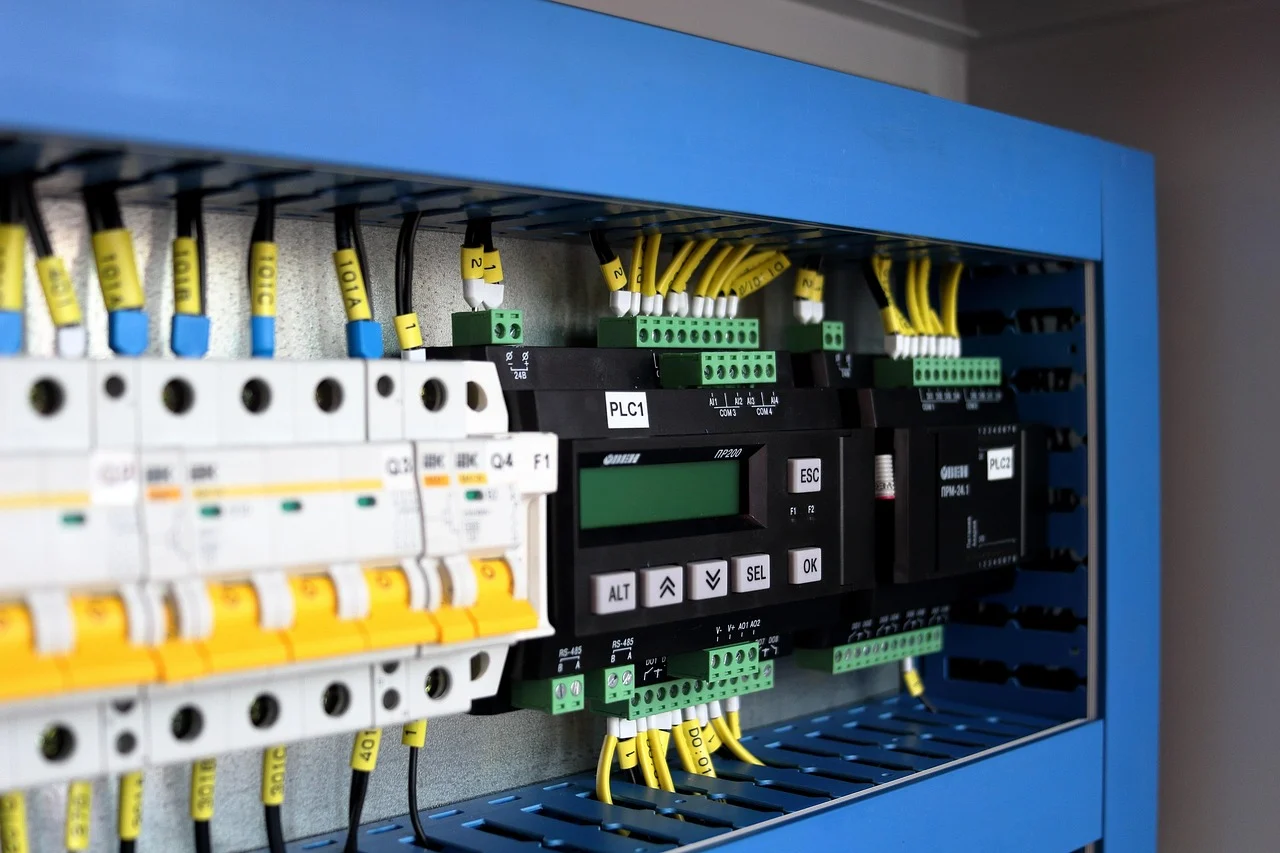
Behind every automated production line, energy management system, or building control network lies a controller responsible for coordinating operations in real time. While industrial automation often focuses on robotics, analytics, or connectivity, controllers remain the critical component that ensures machines respond accurately and consistently.
As industries demand higher reliability, longer product lifecycles, and seamless connectivity, organizations increasingly rely on specialized industrial-grade controller development to build systems capable of operating in demanding environments.
Understanding the role of controllers in automation reveals how they influence everything from machine performance to system safety.
The Role of Controllers in Industrial Automation
Industrial controllers function as the central decision-making units within automated systems. They process data from sensors, execute control algorithms, and send commands to actuators that regulate machines and processes.
These systems are responsible for controlling a wide range of operations, including:
- Motor speed and motion control
- Temperature and pressure regulation
- Energy distribution and monitoring
- Industrial robotics coordination
- Data acquisition and process monitoring
Because controllers directly influence physical processes, they must respond to changing conditions within milliseconds while maintaining stability and precision.
Also read: ChatGPT vs Grok 3: Which AI Tool Delivers Better Results
Why Industrial Controllers Must Be Built Differently
Unlike consumer electronics, industrial systems operate under challenging environmental conditions. Controllers deployed in factories, power facilities, or infrastructure networks must withstand factors such as vibration, electromagnetic interference, temperature extremes, and continuous operation.
Key design considerations include:
- Ruggedized hardware for harsh environments
- Long-term component availability
- Real-time processing capabilities
- Compliance with industrial standards
- Fault tolerance and system diagnostics
These requirements ensure that controllers remain operational over long lifecycles while maintaining predictable performance.
PLCs, I/O Systems, and Data Acquisition
Industrial controllers typically operate within a broader control architecture that includes programmable logic controllers (PLCs), input/output modules, and data acquisition systems.
Programmable Logic Controllers
PLCs are widely used to manage industrial processes due to their reliability and deterministic performance. They are designed to run continuously and execute control logic with precise timing.
Their functions often include:
- Monitoring sensor inputs
- Executing ladder logic or control programs
- Managing machine sequencing
- Coordinating communication between devices
I/O Systems
Input/output systems connect sensors and actuators to the controller. High-speed and high-precision I/O modules enable controllers to interact with physical equipment across complex industrial processes.
Data Acquisition Systems
DAQ systems gather operational data from machinery and industrial equipment. This information can be used for process monitoring, system diagnostics, and predictive maintenance.
Together, these components allow controllers to manage both local operations and large-scale distributed systems.
Real-Time Performance and Embedded Systems
Industrial control systems depend heavily on real-time processing. A delay of even a few milliseconds in executing control commands can disrupt synchronized operations or compromise system safety.
To maintain deterministic performance, controllers often rely on embedded platforms that include:
- Real-time operating systems (RTOS)
- Embedded Linux environments
- Multi-core processors
- Hypervisor-based virtualization
These technologies allow multiple processes to run simultaneously while ensuring time-critical tasks receive priority.
Communication Across Industrial Networks
Industrial controllers rarely operate in isolation. They must exchange data with sensors, supervisory systems, and other machines across specialized communication networks.
Common industrial protocols include:
- EtherCAT
- PROFINET
- EtherNet/IP
- Modbus TCP and RTU
- CANopen
- OPC UA
These protocols enable reliable and deterministic communication, ensuring that control systems remain synchronized even in distributed environments.
Multi-protocol compatibility is particularly important when integrating new automation solutions with existing infrastructure.
Applications Across Multiple Industries
Industrial controllers are used in a wide range of sectors where automation and precision are critical.
Industrial Manufacturing
Controllers manage robotic assembly lines, motion control systems, and production equipment to maintain efficiency and accuracy.
Energy and Power Systems
In smart grid environments, controllers regulate electricity distribution, monitor system health, and coordinate relay protection mechanisms.
Building Automation
Controllers manage HVAC systems, lighting networks, and environmental monitoring systems to improve energy efficiency and comfort.
Each industry places unique demands on controller performance, reliability, and integration capabilities.
The Importance of Modular Architecture
Modern industrial systems must adapt to changing production requirements and technological advancements. Controllers built with modular architectures allow engineers to expand functionality without redesigning the entire system.
Modular designs typically include:
- Expandable I/O modules
- Flexible communication interfaces
- Scalable processing platforms
- Software-defined control logic
This flexibility allows automation systems to evolve alongside industrial processes.
From Prototype to Production
Developing a controller system involves multiple engineering stages, each aimed at ensuring reliability and performance before deployment.
Typical development steps include:
- System architecture and requirements analysis
- Hardware schematic and PCB design
- Firmware and RTOS integration
- Communication protocol implementation
- Functional and environmental testing
- Manufacturing preparation and certification
This structured approach ensures that the final product is ready for long-term industrial operation.
The Future of Industrial Controllers
As automation continues to advance, controllers are becoming more intelligent and connected. Modern control platforms increasingly support edge computing, advanced diagnostics, and integration with industrial IoT systems.
Future controller technologies will likely focus on:
- Higher processing performance for complex automation tasks
- Integrated AI capabilities for predictive control
- Improved cybersecurity for industrial networks
- Greater interoperability across automation platforms
These developments will enable industrial systems to become more autonomous, efficient, and responsive.
Conclusion
Industrial controllers play a fundamental role in ensuring that machines and automated systems operate reliably and efficiently. From real-time control logic to data acquisition and network communication, these systems form the backbone of modern industrial infrastructure.
As industries continue to adopt more advanced automation technologies, robust controller design will remain essential for maintaining stability, scalability, and long-term operational performance.